

Are Mobility Aids Tax Deductible in Australia? Everything You Need to Know

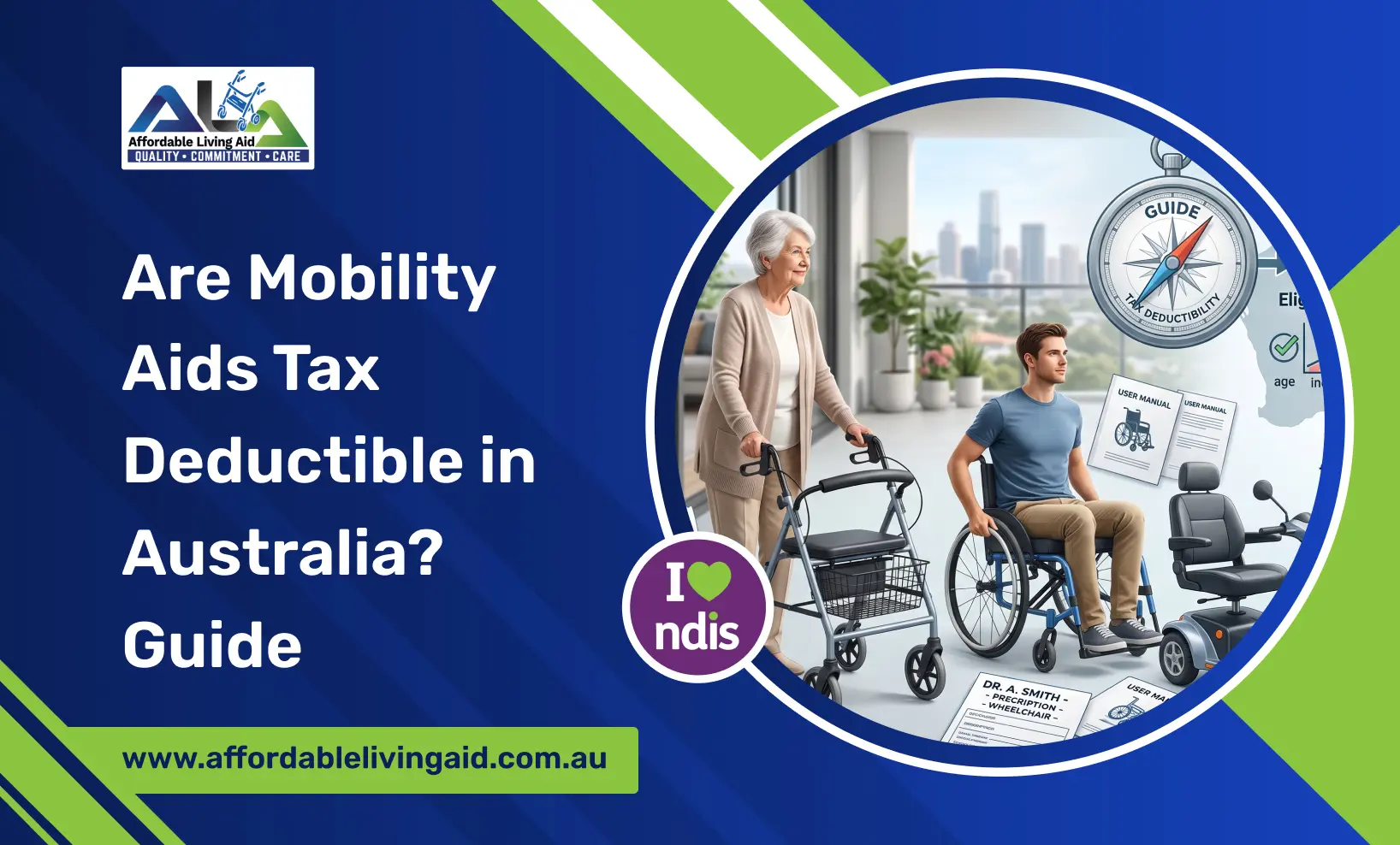
Mobility aids are not regular items people buy, and their cost can vary widely depending on the type you need. Prices can range from a few hundred dollars up to several thousand. Whether you’re buying the aid for yourself, a family member, or your business, it’s only natural to look for ways to reduce the financial burden. The answer, however, isn’t as straightforward as many people expect. In Australia, whether a mobility aid can be claimed for tax purposes depends on its purpose, who paid for it, and how it will be used. While most mobility aids bought for personal use are not tax-deductible, there may be other financial benefits available, such as GST-free purchases. In some cases, businesses or income-producing activities may also be able to claim deductions for these items.
Can You Claim a Mobility Aid on Your Tax Return?
The answer is typically no if you’re buying a mobility aid due to a medical condition, handicap, or decreased mobility. The Australian Taxation Office (ATO) generally treats items such as wheelchairs, mobility scooters, and walking aids as private medical expenses. They can’t typically be claimed as an income tax deduction because they aren’t typically seen as expenses you’ve incurred to create an income, even if they are necessary for your daily existence.
For instance, if you’ve purchased:
- A mobility scooter to facilitate transportation within your neighborhood
- A wheelchair following surgery or an injury
- A walking frame to improve safety when strolling around the house
These purchases would generally be regarded as a personal expense rather than a deductible one.
Business-Related Tax Deduction for Mobility Aid
Across Australia, aged care providers, hospitals, rehabilitation clinics and disability support organisations regularly invest in mobility equipment to support their clients and day-to-day operations. Because these purchases are made for business purposes rather than personal use, they may be treated as legitimate business expenses, subject to the normal tax rules.
What If You’re Self-Employed?
Things can become more complex if you’re a sole trader or self-employed. If a mobility aid is used directly in earning your business income, there may be circumstances where part of the expense is deductible. However, if the equipment also serves a personal medical purpose, only the business-related portion may be claimable, depending on your circumstances and tax advice.
Don’t Confuse Tax Deductions with GST-Free Products
The claim that mobility aids are “tax-free” is frequently made, although this does not imply that they are tax deductible. Tax deduction comes into play when you lodge your annual tax return. If an expense is deductible, it may reduce your taxable income. A GST-free product works differently. Instead of claiming something back later, you simply don’t pay the 10% Goods and Services Tax (GST) when purchasing an eligible item. So, while your mobility scooter may not reduce your income tax bill, you might still pay less when you buy it because GST hasn’t been added to the purchase price.
Which Mobility Aids Are GST-Free?
Australia acknowledges that various medical aids are necessary for those who are ill or disabled. Because of this, the GST Act permits the sale of a variety of mobility items without GST as long as they comply with certain legal standards.
According to the ATO, a mobility aid is generally GST-free if it is
- included in the GST Act’s Schedule 3.
- made especially for those who are ill or disabled.
- not commonly utilized by individuals without a disease or impairment.
Depending on the product, GST-free items may include:
- Manual wheelchairs
- Powered wheelchairs
- Mobility scooters
- Walking frames
- Rollators
- Crutches
- Walking sticks designed for mobility support
- Pressure-relief cushions
- Patient transfer equipment
Where Does the National Disability Insurance Scheme (NDIS) Fit in?
The National Disability Insurance Scheme (NDIS) provides eligible Australians with access to a variety of mobility aids, including wheelchairs and mobility scooters, so they may live more independently. When this equipment is funded through your approved NDIS plan, the cost is covered by your NDIS funding rather than your own money.
For that reason, you generally can’t claim the same expense as a tax deduction. Australian tax rules are designed to prevent “double dipping”, which means you can’t receive government funding for an item and then claim that same cost on your tax return. Instead, the financial assistance is provided through your NDIS plan, making a separate income tax deduction unavailable in most circumstances.
Final Thoughts
Different rules may apply if the equipment is bought for legitimate business or income-producing activities. Many qualified mobility aids are given GST-free, which helps to lower the upfront cost. If you’re ever unsure, don’t rely on assumptions. Checking the latest ATO guidance or speaking with a registered tax professional is the best way to understand exactly where you stand and ensure you’re making the most of any entitlements available under Australian law.