


 Electric Mobility Scooters
Vehicle Modifications for Wheelchair Users: Options and Funding

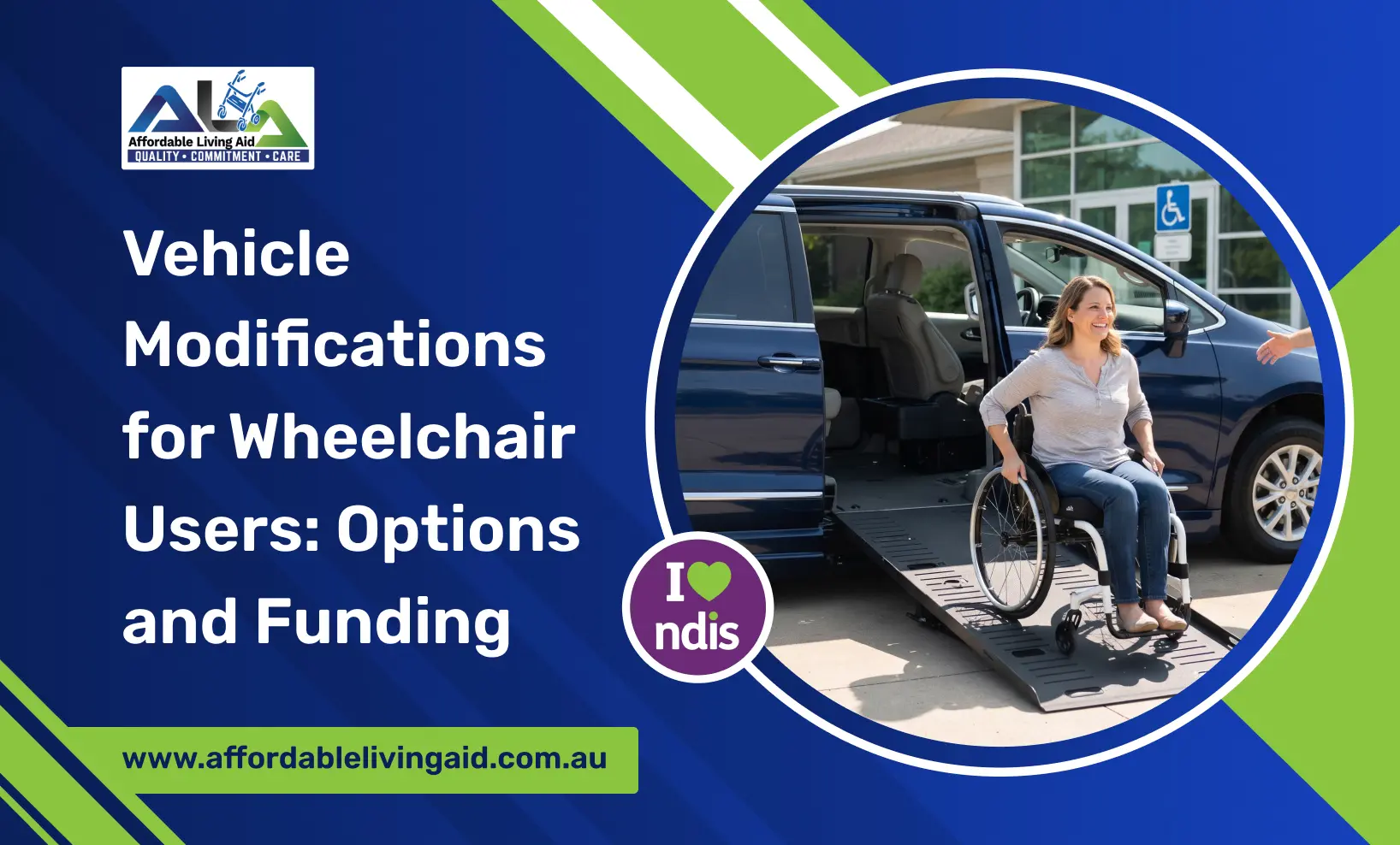
Travelling by car can make it easier to attend medical appointments, visit family, access community activities and get to work. However, standard vehicles do not always meet the needs of people who use wheelchairs or have difficulty entering, exiting or operating a vehicle.
Vehicle modifications for wheelchair users can make travelling more accessible by providing suitable entry systems, wheelchair restraints, specialised seating and adapted driving controls. In Australia, the National Disability Insurance Scheme (NDIS) may fund certain disability-related vehicle modifications when they meet its funding criteria and the participant’s individual needs.
This guide explains the main vehicle modification options, how to choose suitable equipment, what the NDIS may cover, and the steps to take before modifying a vehicle.
What Are Vehicle Modifications for Wheelchair Users?
Vehicle modifications are changes to a car or another suitable vehicle that help a person with disability enter, exit, travel in or drive it safely.
The appropriate modification depends on how the person travels, the type of wheelchair they use, their physical support needs and the vehicle’s design.
For example, a wheelchair user who travels as a passenger might need a wheelchair ramp and securement system. Someone who wants to drive may require adapted controls, specialised seating or other equipment recommended following an individual assessment.
Vehicle modifications may include:
- Wheelchair access ramps and powered hoists.
- Wheelchair securement systems and occupant restraints.
- Modified car seats and transfer assistance equipment.
- Adapted steering, braking and acceleration controls.
- Changes to vehicle entry, seating or internal layout.
- Specialised driver training to use adapted controls safely.
Not every modification is suitable for every vehicle or person. A qualified professional should assess the person’s needs and the vehicle before installation.
Types of Vehicle Modifications for Wheelchair Users
The following options address different accessibility requirements. Some help wheelchair users travel as passengers, while others enable eligible drivers to operate a vehicle with adapted controls.
1. Wheelchair Access Ramps
A vehicle access ramp provides a sloped surface for moving a wheelchair into or out of a suitably configured vehicle.
Depending on the vehicle and the person’s needs, ramps may be manual or powered. They are commonly considered as part of a broader vehicle accessibility solution.
Potential benefits:
- Provides a route into a compatible vehicle.
- Can reduce the need to lift a wheelchair over a high entry point.
- May simplify loading for a passenger who remains seated in their wheelchair.
Important considerations:
The ramp must be compatible with the vehicle’s entry height, available space and wheelchair dimensions. Its load capacity, gradient, surface grip and method of securing the wheelchair also matter.
A portable ramp designed for a doorway or small step should not automatically be treated as suitable for vehicle access. Vehicle ramps must be selected and installed for their intended purpose.
2. Wheelchair Hoists and Lifting Systems
A wheelchair hoist uses a mechanical or powered lifting system to help move a wheelchair into a vehicle.
The most suitable configuration depends on the vehicle, wheelchair weight, available storage space and whether the wheelchair user needs to remain seated during loading.
Potential benefits:
- Reduces the need for someone to lift a heavy wheelchair manually.
- Can assist with loading a wheelchair into a compatible vehicle.
- May make repeated journeys more manageable for family members and carers.
A hoist that loads an unoccupied wheelchair is different from a passenger lift designed to transport a person. These systems are not interchangeable.
Before choosing a lifting system, confirm its rated capacity, vehicle compatibility, operating requirements and safety provisions with a qualified installer.
3. Wheelchair Securement and Occupant Restraints
Wheelchair securement systems help keep a wheelchair in position while a vehicle is moving. Appropriate occupant restraints help protect the person travelling in it.
These are separate but related safety requirements.
A wheelchair’s everyday brakes are not designed to replace a vehicle securement system. Likewise, a wheelchair restraint does not automatically provide the same protection as a correctly configured occupant restraint.
When assessing a system, consider:
- Compatibility with the wheelchair.
- The vehicle’s designated securement points.
- Appropriate occupant restraint positioning.
- Access for the person securing the wheelchair.
- Manufacturer instructions and applicable Australian requirements.
A qualified vehicle modifier should specify a suitable arrangement for the individual and the vehicle. Follow the equipment manufacturer’s instructions and have the complete installation checked before use.
4. Adapted Driving Controls
Some people with disability can drive independently when a vehicle is fitted with appropriate controls.
Depending on the individual’s assessed needs, adaptations may include:
- Hand-operated acceleration and braking controls.
- Modified steering equipment.
- Adapted switches or control interfaces.
- Other specialised driving equipment.
These adaptations must be selected according to the person’s functional abilities and driving requirements. A device that works for one driver may be unsuitable or unsafe for another.
If you intend to drive a modified vehicle, speak with your treating medical practitioner and a driver-trained occupational therapist. You may need a fitness-to-drive assessment, an on-road assessment and specialised training before driving with the new equipment.
5. Modified Seating and Vehicle Entry Assistance
Some wheelchair users can transfer into a vehicle seat, while others need to remain in their wheelchair during the journey.
Depending on the person’s requirements, possible modifications include specialised seating, transfer assistance equipment and changes to vehicle access or internal layout.
Before choosing a solution, consider:
- Whether the person can transfer safely between a wheelchair and a vehicle seat.
- Whether assistance from a carer is required.
- The height and accessibility of the vehicle’s entry.
- The space needed for the wheelchair and other mobility equipment.
- The person’s comfort and positioning during travel.
An occupational therapist can assess these requirements and help determine which modifications are appropriate.
Comparing Vehicle Modification Options
The table below summarises common options and the needs they may address.
| Modification | Main purpose | Important consideration |
| Vehicle wheelchair ramp | Provides a sloped access route | Must fit the vehicle and wheelchair safely |
| Wheelchair hoist | Lifts an unoccupied wheelchair or other compatible equipment | Check lifting capacity and loading configuration |
| Passenger lift | Raises a person using a wheelchair into a compatible vehicle | Requires an appropriate vehicle and professionally assessed installation |
| Wheelchair securement system | Keeps the wheelchair secured during travel | Must be compatible with the wheelchair and vehicle |
| Occupant restraint system | Helps protect the passenger during travel | Must be correctly fitted and positioned |
| Adapted driving controls | Helps an eligible driver operate the vehicle | Requires individual assessment and potentially specialised training |
| Modified seating or transfer equipment | Supports access, transfers or positioning | Must match the person’s needs and vehicle layout |
These options are not a universal checklist. The right solution is the one that addresses the person’s disability-related transport needs while meeting relevant safety requirements.
Does the NDIS Fund Vehicle Modifications?
Yes, the NDIS may fund eligible vehicle modifications when they are needed because of a participant’s disability and meet the applicable funding criteria. Funding is assessed individually and is not guaranteed simply because a person uses a wheelchair.
The NDIS considers whether the requested support is related to the participant’s disability, supports their goals, is effective and beneficial, represents value for money, and is safe and legal.
Potentially fundable supports may include:
- Wheelchair passenger ramps or hoists.
- Adapted driving controls.
- Modified seating and restraints.
- Assessments and trials to determine suitable modifications.
- Required engineering certification or authorisation.
- Certain additional insurance costs directly resulting from funded modifications.
- Maintenance and repairs to funded modifications.
- Specialised driver training where the relevant requirements are met.
The precise support available depends on the participant’s circumstances, the evidence provided and the applicable NDIS rules.
For the current requirements, consult the official NDIS guidance on vehicle modifications and specialised driver training.
What the NDIS Generally Does Not Fund
The NDIS does not fund the purchase or lease of a standard vehicle simply because a person needs accessible transport.
Its vehicle modification rules also exclude ordinary vehicle expenses such as registration, standard insurance, fuel, servicing and general vehicle repairs.
Other exclusions apply to particular upgrades and non-disability-related features. For example, optional extras for family convenience are not automatically fundable just because the vehicle is being modified.
The key distinction is that the NDIS may fund eligible disability-related modifications, not the vehicle itself or its ordinary running costs.
Funding rules can change, so check the current guidance before committing to a purchase or installation.
How to Apply for NDIS Funding for Vehicle Modifications
If you believe vehicle modifications could help you travel more independently, follow these steps before arranging any work.
Step 1: Discuss Your Transport Needs
Start by speaking with your my NDIS contact, treating health professional or relevant support professional.
Explain the barriers you experience when entering, exiting, driving or travelling in a vehicle. Describe how those barriers affect your daily activities, employment, appointments and community participation.
It can help to identify practical goals, such as travelling to work, attending regular medical appointments or reducing the physical assistance needed to get into a car.
Step 2: Arrange an Appropriate Assessment
An occupational therapist with experience in vehicle modifications can assess your functional needs and explore suitable options.
If you intend to drive, you will generally need an assessment by a driver-trained occupational therapist. Your medical practitioner must also assess your fitness to drive under the applicable national standards.
The assessment may consider:
- Your mobility and transfer requirements.
- Whether you will travel as a driver or passenger.
- Your wheelchair dimensions and weight.
- The vehicle’s suitability for modification.
- The equipment required to travel safely.
- Any need for specialised training.
- The estimated cost of the proposed modifications.
For complex or higher-cost modifications, detailed assessment evidence and supporting quotes may be required.
Step 3: Check the Vehicle Is Suitable
Do not purchase a vehicle specifically for modification without obtaining appropriate professional advice.
The vehicle must have enough space, suitable access and the structural characteristics required for the proposed equipment. The assessment should also consider whether the vehicle can accommodate the wheelchair and any necessary securement or restraint systems.
If you are considering a second-hand vehicle, its age, condition, existing modifications and warranty status may affect the assessment requirements.
The NDIS does not fund the vehicle purchase itself.
Step 4: Confirm Funding Requirements Before Proceeding
Review your plan and confirm what funding and evidence are required for the proposed modification.
Under the NDIS process published in October 2026, vehicle modification requests below $15,000 can follow the relevant mid-cost assistive technology process, while modifications above $15,000 require a quote for approval before work begins. The applicable evidence and approval process should always be confirmed against the latest NDIS guidance.
Do not assume that an available budget automatically authorises a modification. Check the relevant funding arrangements and obtain any required approval before committing to the work.
Step 5: Obtain Quotes and Confirm Safety Requirements
Once the assessment identifies a suitable solution, obtain a detailed quote from an appropriately qualified vehicle modifier.
The quote should clearly identify the proposed equipment, installation work and any additional requirements, such as engineering certification or registration-related documentation.
The assessment should also establish whether the modifications will comply with the applicable Australian requirements and the rules in the state or territory where the vehicle is registered.
Step 6: Arrange Installation and Learn How to Use the Equipment
After the required funding arrangements and approvals are in place, arrange installation with the relevant vehicle modifier.
Ask for instructions on operating, securing and maintaining the equipment. Where required, arrange specialised training to help the driver or passenger use the modifications safely.
Keep the assessment report, quotes, installation documentation and any engineering certificates or authorisation reports for future reference.
How Much Do Wheelchair Vehicle Modifications Cost?
The cost depends on the type of modification, the vehicle, installation complexity and the person’s individual requirements.
A relatively straightforward adaptation may cost considerably less than a complex conversion involving structural changes, a passenger lift, securement systems and specialised controls.
Other potential expenses include:
- Professional assessment and equipment trials.
- Installation and labour.
- Engineering certification or authorisation.
- Specialised driving assessment or training.
- Maintenance and repairs to the modification.
There is no single price that applies to every wheelchair-accessible vehicle. Request an itemised quote based on the specific vehicle and recommended equipment rather than relying on a general estimate.
If you are seeking NDIS funding, make sure the quote and supporting evidence meet the current requirements before proceeding.
What to Consider Before Modifying a Vehicle
Vehicle modifications can improve access and independence, but they require careful planning.
Vehicle compatibility
Not every car can accommodate every type of ramp, hoist, wheelchair or adapted control. Check the vehicle’s dimensions, entry height, internal space and structural suitability before choosing equipment.
Wheelchair dimensions and weight
Measure the wheelchair and check its total weight, including any accessories that will travel with it. Confirm that the proposed access system, securement equipment and vehicle can accommodate the wheelchair safely.
Passenger or driver requirements
A passenger who remains seated in a wheelchair has different requirements from someone who transfers into a vehicle seat or drives using adapted controls. The modification should reflect how the person actually travels.
Safety and compliance
Vehicle modifications must be appropriate for the vehicle and comply with relevant requirements. Depending on the modification, engineering certification or other authorisation may be necessary.
Use a suitably qualified vehicle modifier and follow the relevant safety instructions. Do not assume that a product sold for general mobility use is suitable for installation in a vehicle.
Future needs and ongoing maintenance
Consider whether the person’s requirements may change and whether the vehicle will remain suitable over time.
Ask about servicing, replacement parts, maintenance and the process for transferring equipment if the vehicle changes. If NDIS funding is involved, confirm whether ongoing maintenance or other related supports need to be included in the plan.
Can You Buy Wheelchair Accessibility Equipment Instead of Modifying a Vehicle?
In some situations, a person may benefit from a mobility aid or transfer accessory without requiring a permanent vehicle modification. However, a general-purpose mobility product cannot automatically replace a purpose-designed vehicle access or restraint system.
The best choice depends on the difficulty you are trying to solve.
For example, a suitable wheelchair may help with mobility at home and in the community, while a vehicle ramp or hoist addresses a different problem: getting the wheelchair or its user safely into a vehicle.
Affordable Living Aid offers a range of mobility and daily living products that may support other aspects of independent living, including:
- Manual wheelchairs for suitable mobility needs.
- Electric wheelchairs for people who require powered mobility.
- Mobility ramps for appropriate access applications.
- Transfer-related and home care equipment for selected daily living needs.
Explore the mobility aids and ramps range to review available products.
These products should not be assumed to be suitable for vehicle installation or eligible for NDIS funding for vehicle modifications. Check each product’s intended use and obtain professional advice where necessary.
Conclusion
Vehicle modifications can help wheelchair users travel more safely and comfortably, whether as passengers or drivers. Options include access ramps, hoists, securement systems, modified seating and adapted driving controls.
The most suitable solution depends on the person’s needs, wheelchair, vehicle and intended use. If you are seeking NDIS funding, begin with an appropriate assessment, confirm the current evidence and approval requirements, and avoid arranging modifications before the necessary funding and safety checks are complete.
Frequently Asked Questions
Does the NDIS pay for a wheelchair-accessible vehicle?
No. The NDIS does not fund the purchase or lease of a vehicle. It may fund eligible disability-related modifications to a suitable vehicle when the relevant funding criteria are met.
Can I get NDIS funding for a wheelchair ramp for my car?
Potentially. The NDIS may fund a suitable vehicle wheelchair ramp if it is required because of your disability and meets the applicable funding requirements. The ramp must be appropriate for the vehicle and your individual needs.
A general-purpose portable ramp should not be assumed to be suitable for vehicle access.
Do I need an occupational therapist assessment?
An assessment is generally required to establish the need for vehicle modifications and support a funding request. People intending to drive a modified vehicle generally need an assessment by a driver-trained occupational therapist, as well as an assessment of fitness to drive by their medical practitioner.
The exact assessment and evidence requirements depend on the proposed modification.
Can the NDIS fund vehicle modifications for a family member’s car?
Potentially. The vehicle does not necessarily have to be owned by the participant, but the owner must give permission for the modifications, and the participant must be able to use the vehicle regularly. The proposed support must still meet the NDIS funding criteria.
Can I modify a second-hand car?
Yes, provided the vehicle is suitable for the proposed modifications and meets the applicable safety and legal requirements. A professional assessment is important before purchasing a vehicle for this purpose.
Additional vehicle condition evidence may be required for certain older second-hand vehicles, depending on their age, warranty status and the current NDIS process.
Will the NDIS cover repairs to modified vehicle equipment?
The NDIS may fund eligible maintenance and repairs relating to funded vehicle modifications. This is different from paying for general vehicle servicing, fuel or ordinary mechanical repairs. Check your plan and the current funding rules to confirm what applies to your circumstances.
Can I use an ordinary wheelchair ramp to enter a vehicle?
Not necessarily. A ramp designed for a doorway or step may not have the correct dimensions, load capacity or configuration for vehicle access. Use a system specifically suitable for the intended application and obtain professional advice before use.
Where can I find wheelchair mobility products in Australia?
Affordable Living Aid supplies mobility aids, wheelchairs, ramps and other home care equipment, with online product access across Australia. You can browse the available range and check individual product specifications before purchasing.