


Walkers vs Rollators: Which Mobility Aid Is Right for You?

The selection of an appropriate mobility aid has the power to transform an individual’s life. The suitable assistance restores confidence and independence for individuals who are recovering from surgery or dealing with chronic health problems or need additional support during their aging process. The two most frequently selected alternatives for mobility assistance are walkers and rollators. The two items appear identical when viewed from the outside however they fulfill distinct requirements for different types of users. The process of selecting the appropriate item requires knowledge of their specific characteristics.
Understanding Mobility Aids and Their Purpose
Mobility aids exist to help people maintain their balance while decreasing their chances of falling and achieving safer and easier movement through their environment. The category includes both walkers and rollators which differ from each other through their distinct structural features and operational capabilities and their different levels of user assistance. The best option depends on your strength, balance, environment, and daily activity level.
What Is a Walker?
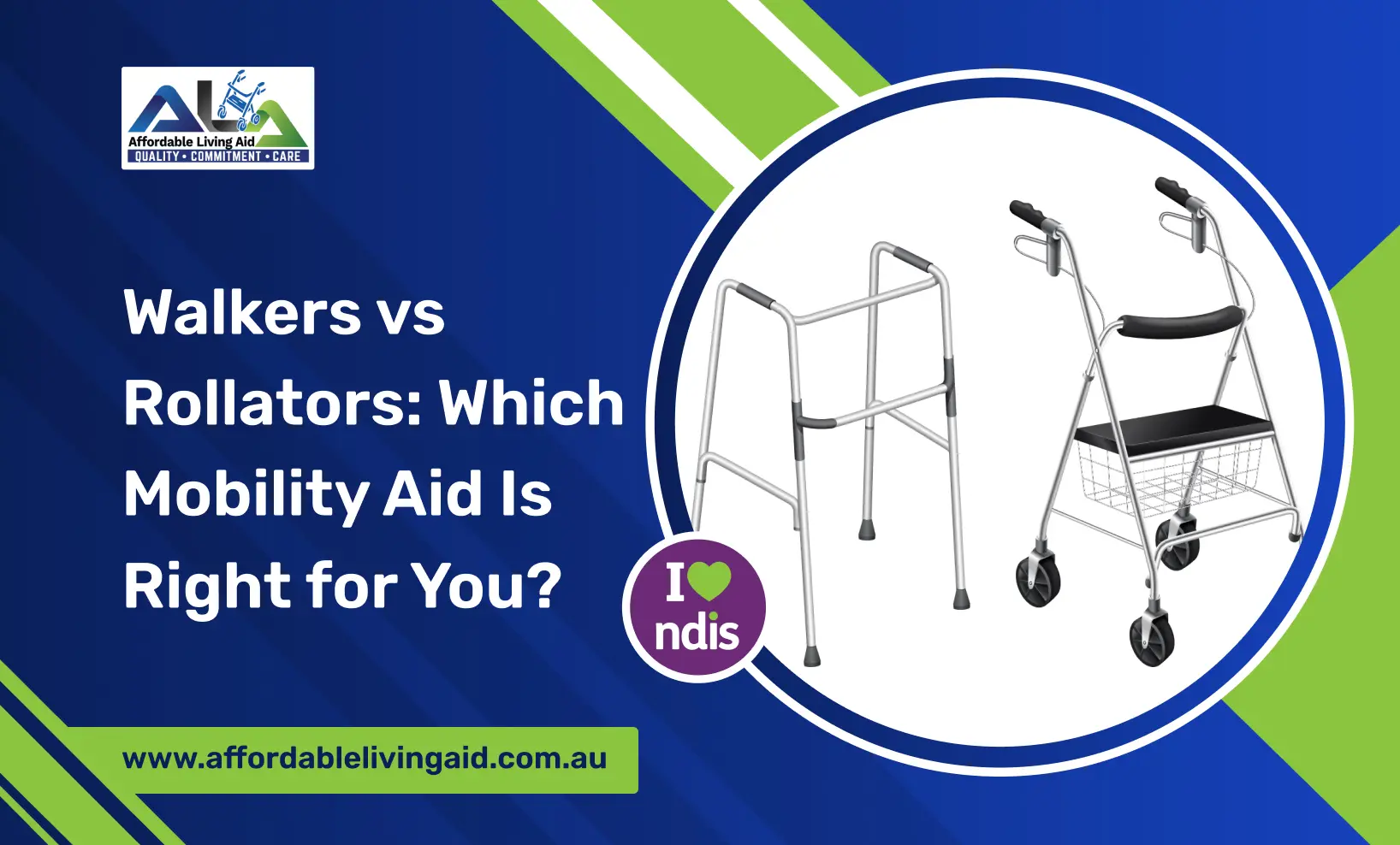
A walker is a sturdy mobility aid with four legs which usually consists of lightweight aluminium material. Traditional walkers require users to lift their device slightly before moving it forward during each walking step. This design offers maximum stability and is often recommended for people who need strong support while walking.
Walkers help users who experience major balance difficulties or who need assistance after their surgical procedures and their physical injuries. Walkers create a stable base which prevents slipping and tipping because their four legs touch the ground when used through proper positioning.
Some walkers include two front wheels which enable users to move more easily while keeping their balance. These hybrid models are often used by people who need support but struggle to lift a standard walker repeatedly.
What Is a Rollator?
The rollator functions as an improved mobility device that comes with three to four wheels and hand brakes and usually includes a seat. People who need assistance with walking can use rollators because these devices allow them to move without needing to lift the equipment.
Active users prefer rollators because they allow users to move freely throughout their indoor and outdoor environments. The seat provides users with a resting place during their extended walks, while the storage baskets and pouches offer users an efficient method to transport their belongings. Users can gain better control of their movements through hand brakes because these brakes enhance their ability to move on slopes and uneven ground.
The design of rollators helps people who have upper-body control and balance abilities to use the hand brakes because they need to maintain hand strength and coordination.
Key Differences Between Walkers and Rollators
People need to choose between a walker and a rollator because they must decide which option provides better stability and which option allows greater freedom of movement.
Walkers offer:
- Maximum support and balance
- Simple design with fewer moving parts
- Better control for users with limited strength or coordination
Rollators offer:
- Easier movement without lifting
- Added features like seats and storage
- Greater independence for longer distances
Walkers use safety features to maintain balance while people use rollators to achieve comfortable movements during their extended usage.
Which One Is Right for You?
People who have balance problems that cause them to feel dizzy or who need rehabilitation assistance should use walkers because they provide safer mobility. The system promotes safety by directing users to move at a safe speed while it helps them stay upright during their activities. A rollator provides better support to users who can stand without assistance but need help to walk when they become tired. It allows for smoother movement and promotes an active lifestyle without excessive strain.
Your living environment also matters. Walkers are often easier to use in tight indoor spaces, while rollators perform better outdoors on sidewalks and in parks.
Final Thoughts
People need different mobility solutions because walkers and rollators provide distinct advantages for their movement requirements. Your physical condition and daily activities together with your personal comfort level will determine which option suits you best. A healthcare professional or physical therapist should be consulted to assist you in choosing a mobility device that will improve your safety and confidence and ability to move independently.
The proper assistance system enables people to maintain their physical mobility which leads to greater self-empowerment.