

Top Physiotherapy Tools You Can Use at Home

Injury, surgery or chronic pain condition recovery doesn’t necessarily mean interminable clinic visits. If you have the right physiotherapy apparatus, it will be possible for you to safely and effectively complete your rehabilitation journey in your own home.
Consistency is the most important aspect of the recovery process. Regaining the lost strength, flexibility, and confidence can be done faster with the help of daily small exercises focusing on target areas. With state-of-the-art rehabilitation tools and exercise aids, you will be able to keep following your physiotherapist’s program wherever you are, without going out.
Let us first discuss the advantages of at-home physiotherapy, its associated products, and how these will deliver the health benefits you are aiming for in the long run.
Importance of At-Home Physiotherapy
At-home physiotherapy is not only a matter of convenience but also a matter of power. It lets you direct your own recovery, keep your commitment, and make progress in between the professional sessions.
Here is what makes it worth to invest in:
- Convenience: You can easily fix your schedule as per the requirement without relying on anyone else. This adaptability will make it easier to constantly stick to your rehabilitation routine daily.
- Cost Saving: Physiotherapy appointments on a regular basis can become a serious financial burden. Acquiring your own equipment means that you will not have to pay for physiotherapy as after-continuance, so your costs will be reduced considerably.
- Continuous Care: Recovery is a gradual process. The right tools can keep your body active and engaged, reducing the chances of the development of stiffness and expediting recovery.
At-home physiotherapy not only prevents you from losing any progress during the intervals between sessions but also connecting professional treatment with movement in everyday life.
Are you looking for high-quality physiotherapy equipment in Tamworth? Then, head to Affordable Living Aid to check out an extensive range of physiotherapy and exercise aids all meticulously designed for a safe, consistent, and free movement recovery.
Best Physiotherapy Tools for Use at Home
Are you ready to prepare your recovery toolkit at home? Here are some of the top-notch and very user-friendly rehabilitation instruments that will help you with the process of strengthening, stretching, and soothing your body in a safe manner.
1. Pedal Exercisers
Best for: Building leg strength and improving circulation
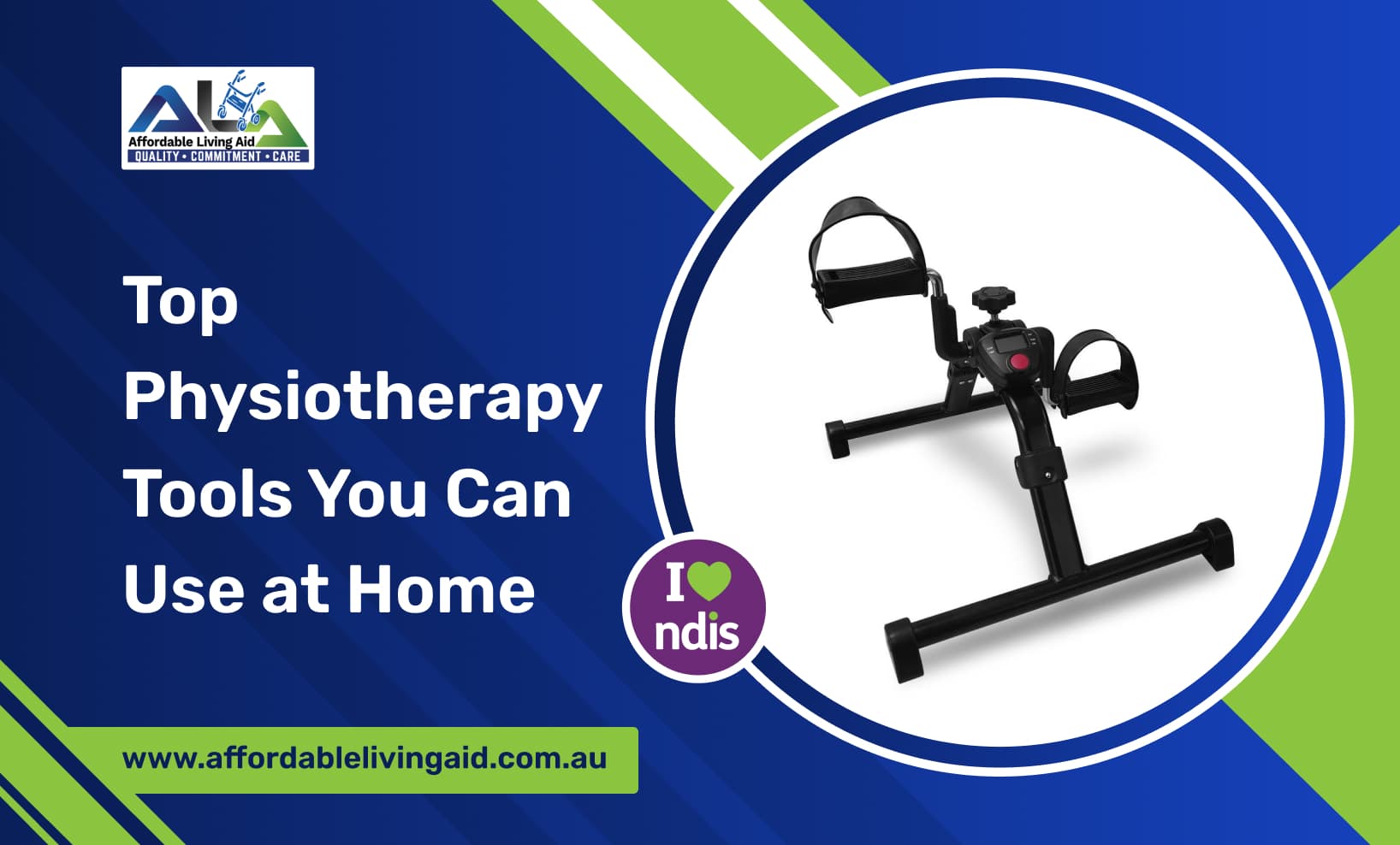
A pedal exerciser is a small, low-impact device that can be used for post-surgery rehabilitation or anyone who needs to regain leg mobility. It imitates the cycling movements, thus helping you to strengthen your lower limbs and enhance blood circulation, while at the same time reducing the stress on your joints.
You can perform this exercise while sitting in a chair or even at your desk, so it is a good choice for light daily activity. Adjustable resistance is a feature that many models have, which allows you to gradually advance as your strength is returned.
2. Therapy Bands
Best for: Regaining flexibility and muscle tone
Therapy bands (or resistance bands) are one of the most versatile physiotherapy exercise aids. They can rebuild strength, improve the range of motion, and keep the muscle groups active without using large pieces of equipment.
These elastic bands come in different resistance levels starting from light to heavy, which makes them perfect for both beginners and advanced users. They are also easy to carry around, so you can stretch or strengthen your body anywhere and anytime.
Pro tip: Use resistance bands of a lighter weight for the recovery process and gradually increase the weight as your stability improves.
3. Hot/Cold Packs
Best for: Alleviating pain, inflammation, and swelling
In the case of dealing with soreness or pain caused by workouts, hot/cold packs are an essential item. Heat therapy increases the blood flow and relaxes the muscles that are tight, meanwhile, cold therapy helps to bring down inflammation and relieve sharp pain.
Reusable gel packs can be heated in the microwave or frozen, thus providing two-in-one relief for different stages of recovery. Whether you are working on reducing the stiffness in your joints or soothing a muscle strain, this handy and simple tool will always be there to provide the needed comfort right where and when it’s needed.
4. Foam Rollers
Best for: Aiding muscle recovery and improving circulation
If you have ever undergone physiotherapy and then subsequently a professional massage, you probably experienced a great relief. A foam roller is a piece of equipment that helps you to obtain the same effect at home. By rolling your muscles along the foam roller, you will be able to release the tension, eliminate soreness, and at the same time open up more room for flexibility.
Foam rolling also comes in handy as a pre or post workout ritual since it promotes blood circulation and keeps muscles from getting stiff. You can use a hard roller for deep weight massage or a less hard one for tender muscle recovery. It is a revolution for anyone who is handling muscle hardness or those who have been recovering from long-term injuries.
How to Choose the Right Tools
Physiotherapy equipment does not have the same impact on all recovery processes. In order to get the highest benefits, think of your own specific requirements and capabilities before you go shopping.
- Match Tools to Mobility Level:
In case you are at the very beginning of the recovery process or are still only able to move a little, then you should use very gentle aids like therapy bands or pedal exercisers as your starting point. For the final stages, add in the tools that will help increase your strength and flexibility like foam rollers.
- Define Your Recovery Goals:
Are you concentrating on getting your strength back, increasing your flexibility, or controlling pain? Being aware of your aims enables you to pick out the tools that will be in line with your particular rehab plan.
- Consult a Physiotherapist:
Never get into any new exercise routine without consulting your physiotherapist or healthcare provider first. They will be able to suggest the most appropriate rehabilitation aids and ensure that you are using them correctly so that injury does not occur.
Choosing the right equipment will provide you with a customized home setup that will assist in your gradual and safe progress.
Funding Support Options – National Disability Insurance Scheme (NDIS)
For those individuals who are living with a disability that severely limits their movement and daily activities, the National Disability Insurance Scheme (NDIS) is a source of funding for necessary aids and equipment.
Eligibility:
To be eligible, the applicant needs to be:
- An Australian citizen or a holder of a permanent resident visa;
- between 9 and 65 years old;
- Suffering from a permanent disability that has an impact on their day-to-day living.
Based on your unique requirements, the NDIS will compensate for the services and supports you need, namely the rehabilitation gadgets, exercise aids, and physiotherapy equipment they will improve your mobility and self-reliance.
Conclusion
The healing process does not end at the clinic. Using appropriate physiotherapy gadgets, you can keep on with your rehabilitation at home, thus becoming more muscular, less painful, and more mobile at your own speed.
Among the pedal exercisers and therapy bands, hot/cold packs and foam rollers are the simple yet powerful exercise aids that can bring professional-quality rehab into your living room.