


Difference Between a Walking Stick and a Cane

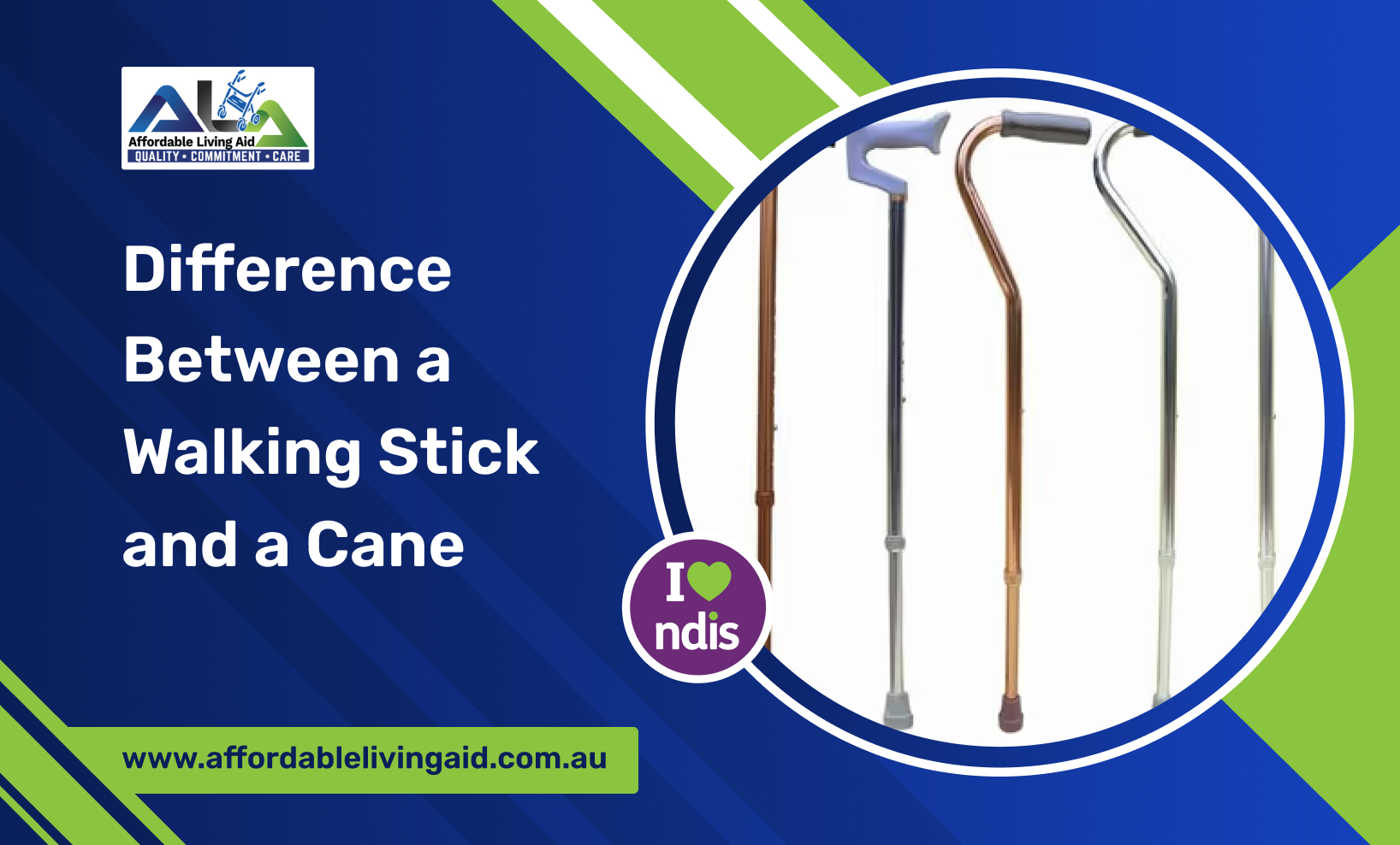
Mobility aids help people move safely and stay independent. Many seniors, rehabilitation patients, and people with disabilities rely on assistive technology to maintain balance and reduce the risk of falls. Two commonly used mobility aids are walking sticks and canes.
Many people think they are the same, but there is a clear difference between a walking stick and a cane. Each device is designed for a specific purpose and offers different levels of support.
Understanding these differences can help seniors, caregivers, and NDIS participants choose the right mobility support for daily living. In Australia, choosing the correct aid can also improve safety at home and support independent living.
What Is a Walking Stick?
A walking stick is traditionally used for outdoor walking and light balance support. It is often associated with hiking or long walks rather than medical support. You can explore more mobility solutions in our mobility aids category
Walking sticks are designed to provide occasional stability when walking on uneven surfaces such as trails, parks, or rural paths.
Key Features of a Walking Stick
- Usually made from wood, aluminium, or carbon fibre
- Straight shaft with a simple handle
- Often taller than medical canes
- Used mainly for balance rather than weight support
- Common for hiking or outdoor walking
Walking sticks are helpful for people who only need minimal mobility support and are commonly found in the walking sticks range.
What Is a Cane?
A cane is a medical mobility aid designed to support people with balance problems, injuries, or reduced strength in one leg. It helps redistribute body weight and improves walking stability.
Canes are widely used by seniors, rehabilitation patients, and individuals with disabilities, often alongside homecare equipment.
Key Features of a Cane
- Designed specifically for medical mobility support
- Adjustable height for better posture
- Ergonomic handles for comfort
- Rubber tip for slip resistance
- Can support partial body weight
Many canes are recommended by healthcare professionals and are commonly used as part of rehabilitation or daily living aids.
Main Difference Between a Walking Stick and a Cane
The main difference between a walking stick and a cane is their purpose and level of support.
| Feature | Walking Stick | Cane |
| Primary Use | Outdoor walking or hiking | Medical mobility support |
| Support Level | Light balance support | Weight-bearing support |
| Design | Simple straight stick | Ergonomic medical design |
| Adjustability | Often fixed height | Adjustable height |
| Typical Users | Hikers, outdoor walkers | Seniors, patients, people with disabilities |
In simple terms:
- A walking stick helps with balance during walking.
- A cane helps support body weight and improve mobility.
When Should You Use a Walking Stick?
A walking stick may be suitable if you:
- Walk long distances outdoors
- Need light balance support
- Enjoy hiking or nature walks
- Want stability on uneven surfaces
However, walking sticks are not ideal for people who need strong support due to injury or mobility limitations.
When Should You Use a Cane?
A cane is recommended if you:
- Have knee, hip, or leg weakness
- Experience balance issues
- Are recovering from surgery or injury
- Need support when walking indoors or outdoors
- Require daily mobility assistance
Healthcare providers often recommend canes as part of rehabilitation or long-term mobility support within the mobility aids range.
Types of Canes Available
There are several cane types designed for different mobility needs.
Standard Canes
Basic mobility aids designed for light support and balance.
Quad Canes
Feature a four-point base for extra stability. Often used by seniors or patients recovering from surgery.
Folding Canes
Portable and easy to store. Ideal for travel and everyday convenience.
These assistive devices are commonly used in homecare settings and can significantly improve safety and independence.
Safety Tips When Choosing a Mobility Aid
Selecting the right mobility aid is important for safety and comfort.
Consider the following tips:
- Ensure the correct height for proper posture
- Choose non-slip rubber tips
- Look for comfortable ergonomic handles
- Consider adjustable options
- Ask a healthcare professional for advice if needed
Properly fitted mobility aids reduce strain and help prevent falls.
How Mobility Aids Support Independent Living
Mobility aids play a vital role in maintaining independence for seniors and people with disabilities.
Benefits include:
- Improved balance and walking stability
- Reduced risk of falls
- Greater confidence while walking
- Better daily mobility at home
- Increased ability to perform everyday tasks
Many Australians rely on assistive technology and daily living aids to maintain their quality of life.
NDIS participants may also receive support for mobility aids depending on their plan and needs. You can learn more or place an order through the NDIS order form.
Choosing the Right Mobility Aid in Australia
When selecting mobility support equipment, it is important to consider your specific needs.
Factors to evaluate include:
- Level of mobility support required
- Indoor vs outdoor usage
- Weight capacity
- Adjustability
- Comfort and grip
High-quality mobility aids, rehabilitation tools, and homecare equipment can make a significant difference in daily life.
If you need guidance, you can also visit our contact page for support.
Conclusion
Understanding the difference between a walking stick and a cane is important when choosing the right mobility aid. Walking sticks are typically used for outdoor balance support, while canes are designed for medical mobility assistance and everyday walking stability.
For seniors, caregivers, NDIS participants, and rehabilitation patients, the right assistive technology can significantly improve safety, confidence, and independence at home.
Affordable Living Aid provides a wide range of mobility aids, homecare equipment, rehabilitation tools, and daily living aids to support Australians in living comfortably and safely.
Explore the available mobility solutions and find the right support equipment to improve daily life and independence.