


How to Choose the Right Walker, Rollator, or Mobility Scooter

Safe walking requires proper mobility aids, which also help people walk independently and build their self-assurance. The selection process requires users to pick between walkers and rollators and mobility scooters because each device offers a different level of mobility assistance and selecting the incorrect device will result in discomfort and fatigue and increased risk of falling. The decision-making process requires users to understand all device functions while evaluating their personal physical requirements and daily habits.
Start With Your Current Mobility Level
The first step requires you to self-evaluate your mobility requirements. Some people need help only with balance, while others require full weight-bearing support or assistance over longer distances. Walking bridges the distance between outdoor spaces and indoor areas because different users need different strength and endurance and stability solutions.
Basic walkers serve as appropriate mobility devices for individuals who can walk without help but need extra support to maintain their balance. A rollator or scooter provides better support when you experience fatigue or joint pain after walking short distances. Your current device selection should reflect your present capabilities instead of selecting devices to support future goals because this approach will help reduce your workload while enhancing your personal safety.
Understanding Walkers and Who They Are Best For
Standard walkers serve as the optimal solution for individuals who need complete support during their weight-bearing activities. Users need to lift the device between three to four legs of the walker to move forward by walking. The design enables users to walk at slower speeds because of its balance control features, which help users who deal with post-surgery recovery and neurological problems and severe physical limitations.
Walkers are best used indoors or on flat surfaces where stability is more important than speed. The device needs users to use their upper body strength for both lifting and frame positioning.
When a Rollator Is the Better Choice
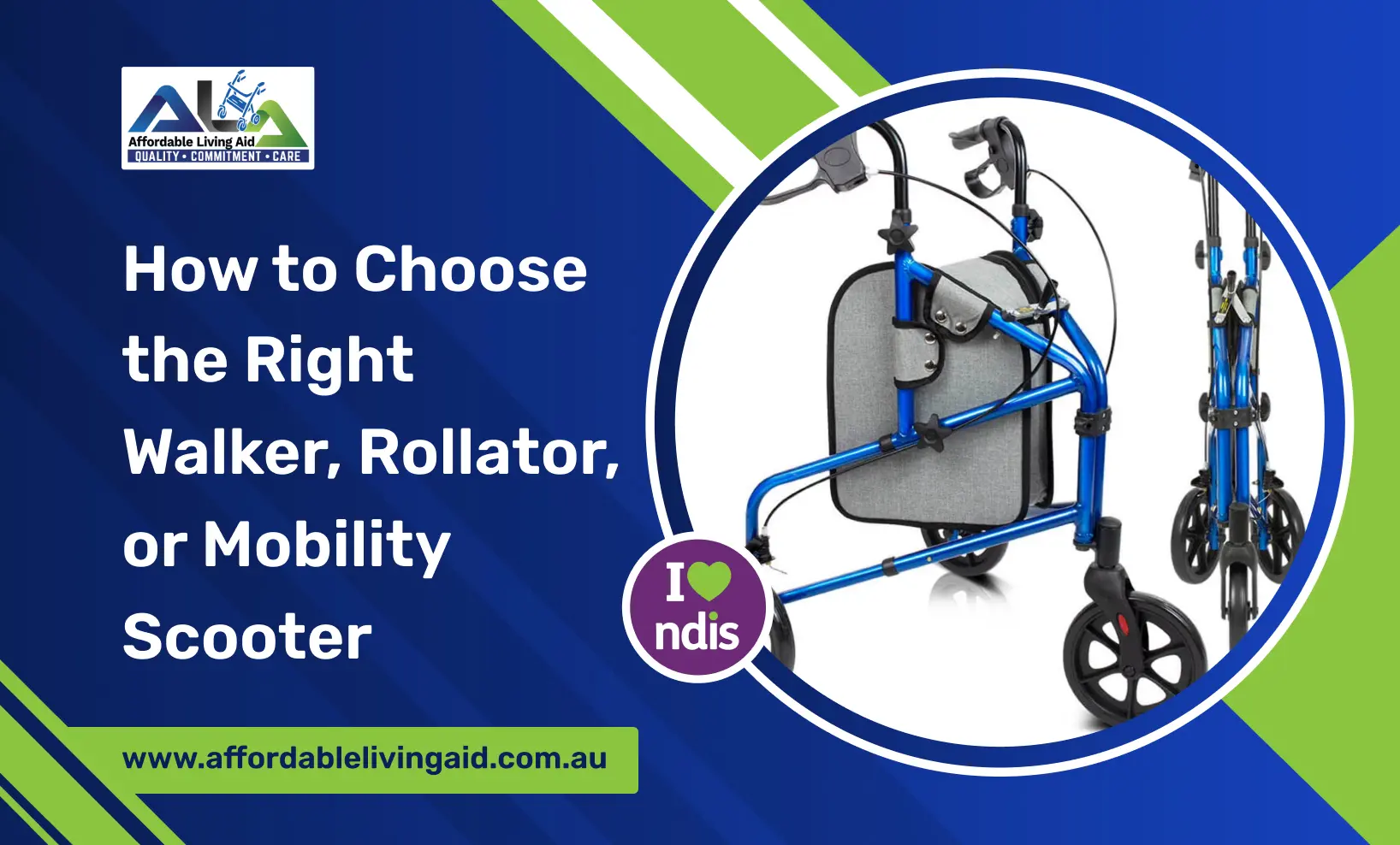
A rollator functions as a walker which contains three or four wheels together with a seat and hand brakes and storage basket. The equipment provides walking assistance to users who need help maintaining balance and walking for extended periods. Rollators enable users to walk more smoothly while the equipment functions better on outdoor terrain and extended walking routes.
The built-in seat provides a vital function for people who require multiple rest periods throughout their day. Users who need to use rollators for walking purposes should consider standard walkers because rollators provide less weight-bearing support compared to those devices.
Deciding If a Mobility Scooter Is Necessary
Mobility scooters exist to provide wheelchair users who face difficulty walking short distances with safe outdoor travel options. The powered devices enable users to maintain their independence while they navigate public spaces for activities like shopping and medical appointments.
Scooters provide an ideal transportation solution for people who experience limited energy, persistent pain, or breathing difficulties. The system requires users to possess strong upper body strength while they need to operate the steering controls, and they must have enough room at their residence to store and charge the device. The system cannot function effectively in compact indoor areas.
Consider Your Daily Environment
Your living environment plays a major role in choosing the right mobility aid. Users face challenges from tight hallways and stairs and uneven surfaces together with door widths. Walkers and rollators function better for indoor mobility whereas scooters excel at outdoor movement on wide open tracks that have smooth surfaces.
The primary usage area for the device needs assessment between home use and outdoor use and both. The device needs to match your environment because using an incompatible device creates safety hazards and generates user frustration.
Comfort, Adjustability, and Fit Matter
The proper fit of your device needs to be maintained regardless of the device you select. You should adjust the handles to your height to maintain a standing position while bending your elbows. The seats need to provide both comfort and support when they are part of the system, while the brakes must allow simple operation to start them.
Mobility devices that do not fit properly cause users to experience shoulder discomfort, back discomfort, and bad body alignment. You should use the device yourself or ask for expert opinion before you make your purchase.
Safety Features and Practical Add-Ons
Certain features create better safety measures which enhance the product’s usability. The following features create better usability of the product:
- Hand brakes on rollators and scooters
- Anti-tip wheels or stabilisers
- People can see reflective elements for visibility
- Storage options for personal items
The selection of extra features should not determine your choice because these features will improve both your comfort and your independence if you select the right ones.
Get Professional Advice Before Buying
Your mobility requirements will be assessed by an occupational therapist or physiotherapist who will then recommend the best solution for your needs. The professional guidance guarantees that the device will help you reach your objectives while keeping you safe from falls and maintaining functionality for your evolving requirements.
The selection of an appropriate walker, rollator, or mobility scooter protects your safety while increasing your independence and supporting your long-term health. The process of establishing your requirements correctly will produce better results, which will increase your ability to move throughout the day.