


Orthopedic Supports Explained: When to Use Braces vs Compression vs Posture Aids

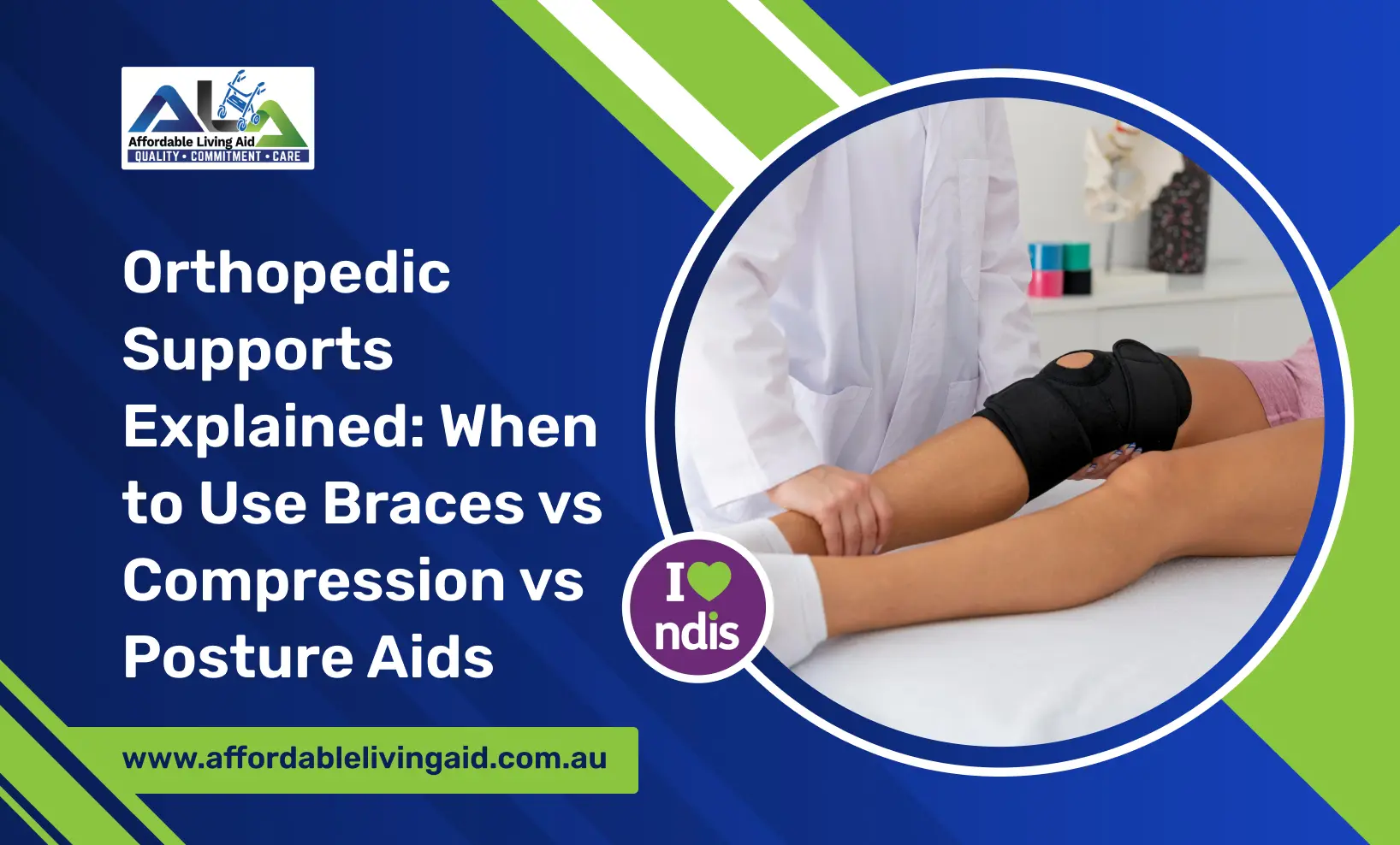
Orthopedic supports have become so widely used that they are no longer separated by any particular profession, the same orthopedic devices that are worn by athletes are usually sported by office people as well. On the other hand, some people still don’t have a clear understanding of what such devices are supposed to do. As a result, in some cases the use of wrong support may lead to ineffective treatment at best and counterproductive treatment at worst. Each of the braces, compression supports, and posture aids serves a distinct purpose, and hence, it is crucial to be aware of when to use which one in order to get real benefits without forming dependency or discomfort.
In this post, we will explain how these devices work, under what conditions they would be sensible to use, and how to use them in a manner that would be considered responsible.
Learning About the Function of Orthopedic Supports
Above all, orthopedic supports are meant to help the body, not to take its place. Some of their core functions include joint stabilization, pain relief, posture enhancement, and swelling control. They are, however, not intended to be the sole agents in the process of permanently “solving” a problem. Typically, most supports work better as part of a comprehensive treatment plan that includes things like rest, exercise, physical therapy, or perhaps medical guidance.
The misconception made by most people is that all supports perform the same function. On the contrary, braces, compression garments, and posture aids have completely different working mechanisms.
Where Braces Are a Good Option
Among orthopedic supports, braces are the ones that are most rigid and limiting in terms of movement. They are specifically made to control the motion, give stability to the joint, or avert the injured area from getting more strained. Commonly, you would find braces used on the knees, ankles, wrists, and elbows, especially post injury or during the healing process.
Braces are generally suitable when a joint is unstable, there is pain in moving the joint, or there is a high risk of re-injury. For instance, a person with a ligament injury may use a knee brace to limit the joint’s movement while the scar tissue is forming. Athletes coming back to sports after a sprain often depend on braces to protect the suffering area during the impact of movements that are hard to avoid.
Nevertheless, lots of considerations should be given to the use of braces. The long-term use or misuse of the braces can lead to the weakening of the nearby muscles as the braces provide stabilization. Therefore, it is common practice to recommend braces for temporary support, specific activities, or under the guidance of a health professional rather than for all day and every day use.
The Role of Compression Supports
Compression supports are more lightweight, flexible, and less restrictive than braces. Instead of immobilizing the joint, they exert mild, persistent pressure on the area. This pressure will lead to the reduction of swelling, enhancement of blood flow, and giving the person a feeling of support without impeding movement.
Compression sleeves and wraps are extensively used for knees, calves, elbows, and wrists. They are widely used by runners, those who work out in a gym, and those with mild joint pain as they allow total motion while providing comfort and stability.
Compression is most appropriate for mild pain, tired muscles, or post-activity recovery. It is often used for treating inflammation that results from exercise or long periods of standing. Although compression might be a comforting feeling, it is not meant for serious injury stabilization. In case of a joint feeling unstable or painful during movement, a brace or at least medical evaluation might be the better option.
Where Posture Aids Fit In
Posture supports are not aimed at injury recovery but mainly to make the user aware of the correct alignment. In contrast to braces and other compressing apparatuses, the aids for improving posture are not directed to a single joint area. They may be applied to the shoulders, upper back, or whole spine so as to promote good posture better.
Posture correctors exert their effect by either subtly pulling back the shoulders or giving a signal to the user whenever he/she slouches. Thus, the aids are no less than a necessity for the ones who have to sit in front of a computer, with a phone, or at a desk for long periods.
“Reminding” is the word that best describes what these devices do. The aim of posture aids is to drive the users to maintain perfect posture all day long. People who overuse them may find their muscles relying on the device for support instead of developing natural postural strength. The best way to use a posture aid device is the combination of short, purposeful sessions with back and core strengthening exercises.
Choosing the Right Support for Your Needs
The process of finding the right orthopedic support starts with recognizing the issue that needs to be solved. A brace is the most likely option for pain caused by impaired stability or injury. On the other hand, compression can be a better solution for swelling, fatigue, or slight discomfort. In the case of poor posture that is due to habits rather than injury, posture aids are effective.
The importance of proper fitting cannot be overemphasized. A too-tight support can cut off blood flow, while a too-loose one will not have any positive effect at all. The adjustable type of designs is usually the most accommodating, and they can work well with different body shapes and activity levels.
When you plan to use the support, it is worthwhile to think about that. Some are for active use, others for recovery, while some are for brief intervals during the day. Wearing the right support at the wrong time may lessen its effect.
Avoiding Common Mistakes
One of the most frequent errors committed by people is putting on supports all the time without re-evaluating the necessity. The supports have to be adjusted in accordance with your condition. When strength, mobility, or posture improves, the dependence on external support should decrease and not increase.
Another wrong step is to treat supports as a continuation of movement or rehabilitation therapy. Reducing pain is possible with the help of supports, but at the same time, they do not contribute to the treatment of the weaknesses or imbalances that are causing the pain. This lack of treatment can cause the person to suffer longer rather than the problem being solved.
In the case of pain that lasts, gets worse, or comes together with the loss of function, a professional assessment is a must. Orthopedic supports are like instruments, not diagnoses.
Using Supports Responsibly
Orthopedic supports can be very beneficial if they are used in the right way. They can alleviate pain, enhance the ability to move and support healing. The secret is to choose the proper type, for the correct reason, for the appropriate duration.
Consider the likes of braces, compression clothing, and posture correctors as temporary partners, not as permanent crutches. They can work along with proper movement, and strength as well as awareness, to support your body without restrictions.