


Best Walking Aids for the Elderly in Australia: Mobility Solutions That Restore Confidence and Independence

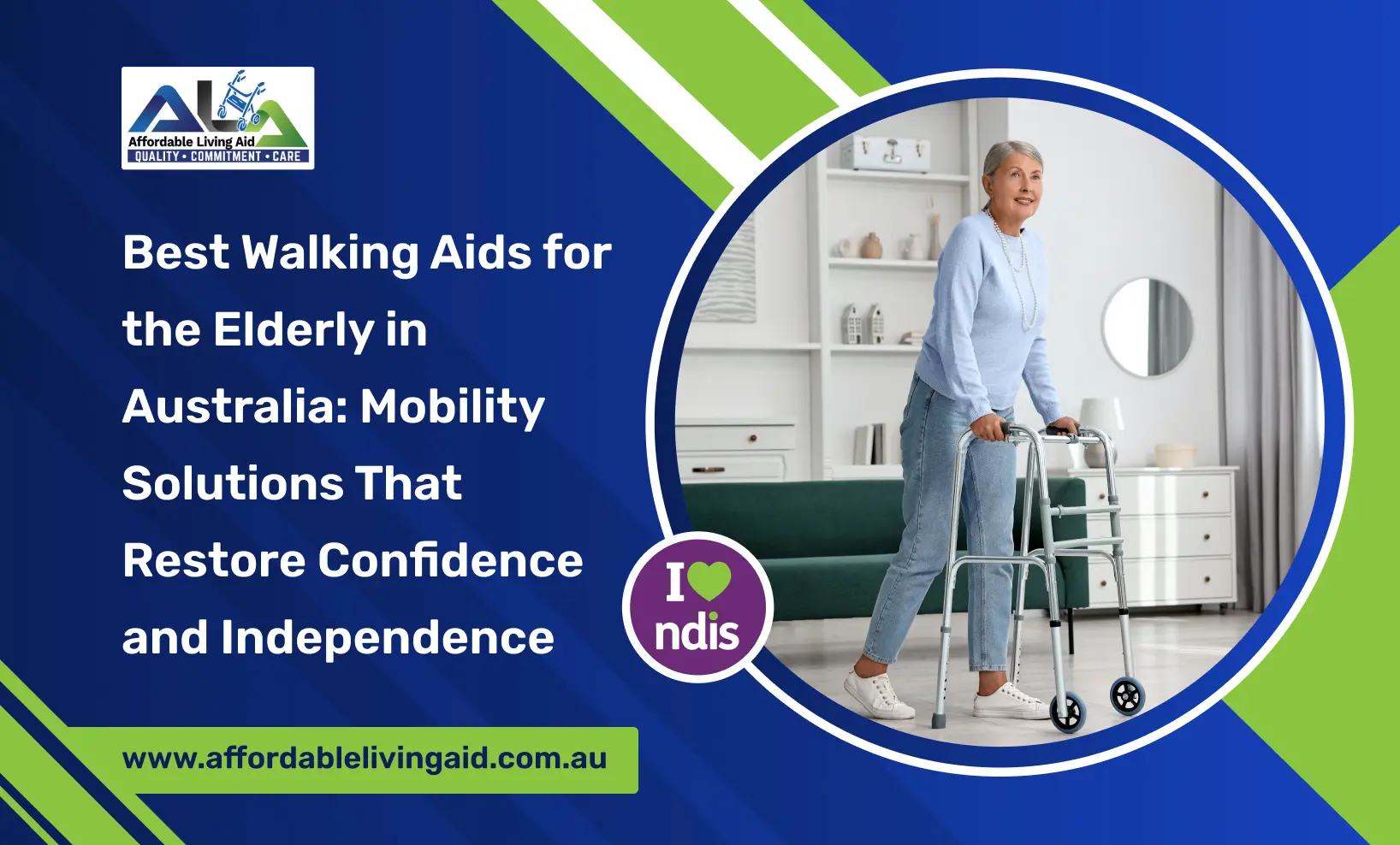
Older Australians frequently go through a silent transition, the moment they notice that walking, for them, does not come naturally anymore. A minor bump, A sudden shift in their body, and a doubt about their ability to stand up are all signs. It is not a dramatic process, but it varies individually. Walking is a sign of independence, and if it is not sure, then self-esteem losses its grip as easily as physical stability.
On the positive side, having mobility issues does not necessarily mean withdrawing from every fun activity. Inferring the suitable walking aid, most of the seniors are able to control mobility through their daily activities, and also their lives.
Why Mobility Matters More Than We Think?
Mobility entails much more than just the physical movement to get from one place to another. It is about one’s options. The option to go out whenever one likes, to have a friend over, to live in the same house, and to have an independent life without the fear of falling. The appropriate mobility aids is not a sign of weakness, it is a sign of adjustment and a mark of self-respect.
In Australia, where being active and socializing are very important aspects of the elderly people’s staying healthy, walking aids are essential for the seniors to keep the independence and the quality of life.
Canes: Simple Support That Builds Confidence
For lots of seniors, a cane is the beginning of the journey to safer walking. It is a danger-free, light and known-to-all option, and very easy to handle, providing just the right amount of support for balance while the person does not feel limited, at all. An appropriate cane can turn such daily activities as, walking to the mailbox, moving in the house, or walking on an uneven surface becomes more manageable.
What really catches many off-guard is the extent to which a cane acts as an emotional anchor. Its mere presence very often alleviates the anxiety that leads to the cautious and insecure way of moving in the first place.
Walkers and Rollators: Stability That Encourages Freedom
When the issue of balance arises, walkers offer a more secure alternative. Classic walking frames are good and reliable supports, especially when they are used indoors, or with people who are very slow and careful in their movements.
Among seniors in Australia, rollators, which are walkers that are equipped with wheels, have gained a lot of popularity. They move like they are gliding instead of lifting the feet, thus easing the strain on the arms and shoulder muscles. Besides, many are fitted with a seat where the user can sit when tired. Such a transformation of an outing has gone from being exhausting to fun. Seniors can now easily stop, sit, and rest whenever they want, feeling more confident overall and stay out with kids’ for longer periods.
Walking Frames with Wheels: A Practical Middle Ground
Walking frames with wheels are the ideal solution for those who want stability without the bulk of a rollator, offering a comfortable compromise. They ensure support, however, at the same time, they allow the caregiver or the patient to get through the house and out of the house in a smoother manner. Most senior citizens see these as perfect for daily use and for the slow transition from a cane to a supportive aid.
The main advantage here is the balance and options that do not complicate things, the support feels comfortable instead of overpowering.
Mobility Scooters: Extending Independence Beyond Walking Distance
When it becomes too difficult or tiring to walk long distances, mobility scooters can open up the world again. They enable the elderly to use their energy wisely by letting them take the car for shopping trips, visiting friends and relatives, and going outside and enjoying nature.
In a nation such as Australia where parks, shopping malls, and community places are vital in people’s everyday lives, mobility scooters ensure that the elderly are among the seen, are involved, and are also independent. They do not discourage the elderly from walking; instead, they facilitate a lifestyle where walking is no longer the only option.
Walking Poles: Subtle Support for Active Seniors
Some seniors opt for walking poles, especially the active ones who require extra stability support. The pros and cons of these poles are that they keep the user in a standing position, regardless of the ground being uneven, so they are widely used in places like parks and for light physical activities.
For older Australians, the walking poles have been recognized by some as a non-intrusive way of getting the support they need while doing their fitness activities.
Home-Based Mobility Aids: Security Where It Counts the Most
The difficulties in mobility usually start at home. Stairs, bathrooms, and tight spaces are usually the areas with the highest risk. Adding handrails or stair lifts can significantly lessen the chance of falling and enable elderly people to live in their houses comfortably for longer.
The aids may be immovable, but their effects are vast. They guarantee freedom of movement by providing a safer and less stressful way of moving through the house.
Choosing the Right Walking Aid Is a Personal Decision
When it comes to walking aids, no one solution fits all. The choice of the right aids is based on factors like strength, balance, living environment, and daily routines. Comfort, adjustability, and suitability for Australian conditions are also important. A walking aid should be supportive rather than making the user feel awkward or restricted.
It is worth it to spend time trying out different possibilities and having professional advice as it could be a great help to getting the perfect match.
The Emotional Impact of Better Mobility
The mental health of a patient is one of the main benefits that a walking aid can offer. Older people are more prone to be alone at home. If they are not feeling safe to move around and, in turn, are less likely to be active socially and physically. With that, self-assurance comes back, the feeling of being isolated dissipates, and the daily routine seems less daunting.
Mobility aids not only help in preventing falls but also in retaining independence, self-respect, and quality of life.
Support Available for Seniors in Australia
Australia is equipped with a variety of resources that are meant to support seniors in their struggle to access mobility equipment. The assessment of needs is done by the occupational therapist, whereas My Aged Care, along with other similar services, provides the support in acquiring the necessary equipment and financial backing. Moreover, the local mobility experts are there to give personal assistance with the selection and fitting of the device.
It is essential that no person has to undergo the process of adaptation to mobility restrictions by himself or herself.
Final Thoughts
The use of a walking aid should not be viewed as a sign of surrender, but rather as a sign of the decision to endure. Elderly people are still able to live active, safe, and confident lives with the proper mobility solution.
Advancing in years may alter senior’s movement but it certainly does not have to restrict the desire of living. The ideal support will still allow every step to land on the spot where it is meaningful.